U.S.- CHINA
Since our founding in 2002, JHI has worked closely with policymakers, business leaders, technical experts, and civil society from the U.S. and China's largest coal producing regions - notably Wyoming and Shanxi. Wyoming is the U.S.'s largest producer of coal - in the past nearly 400 millions tons annually. Shanxi is China's largest coal producer - around 1 billion tons. Together, the two regions produce nearly 15% of the globe's coal. Coal has and continues to play a key role in powering the U.S., providing good-paying jobs and supporting coal-producing communities. The same is true in Asia.
The International Energy Agency projects that, though global coal use could peak this decade, coal will play a significant role in providing energy to global economies for decades to come. Coal is cheap and provides dependable power. Future projections show that Asian economies will urbanize largely by depending on coal. In the U.S., it remains a stable and affordable provider of power.
At the same time, coal communities like Wyoming and Shanxi that have traditionally depended on coal face an uncertain economic future and there is an ongoing goal to drive economic diversification and expand energy leadership. If a coal plant closes, communities lose economic opportunity by way of jobs and tax revenue.
These are the global, macro, economic and environmental challenges that we grapple with. How can coal communities in the U.S. and China achieve economic diversification while also reducing their global carbon emissions role? To respond to these important questions, since our founding, through meetings, site visits, partnerships, and Memoranda of Understanding organized as part of this project, JHI has helped facilitate clean energy approaches between Wyoming and Shanxi and other important coal-producing regions around the globe.


WYOMING, SHANXI, COAL, CLIMATE


2015: A Clean Energy Partnership
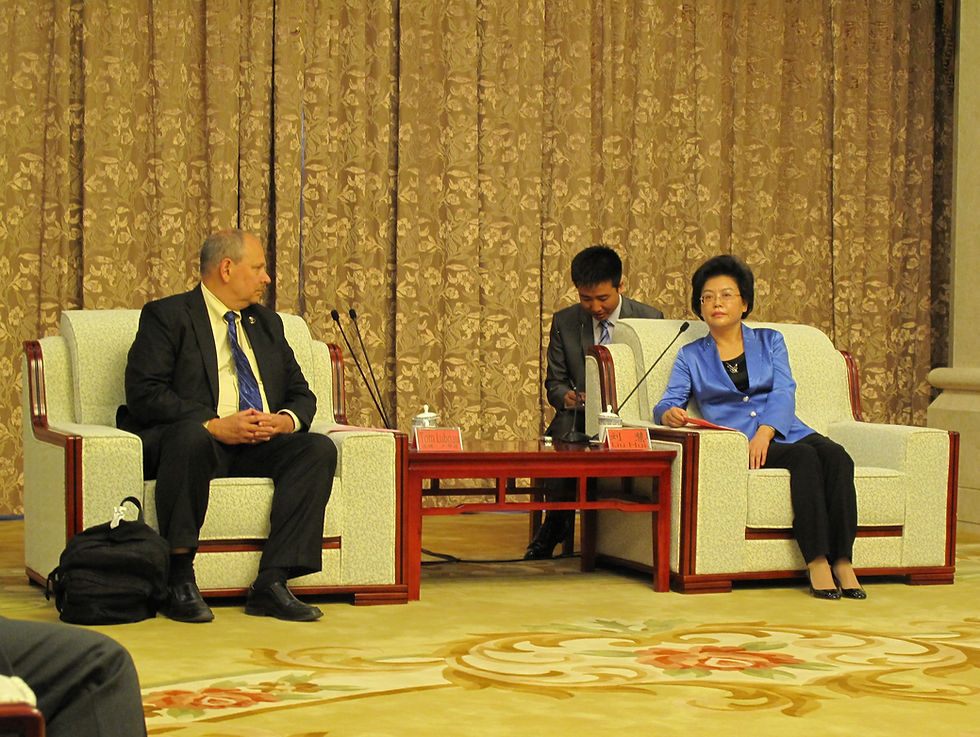
A Clean Energy Partnership (2015): At Governor Li's invitation, JHCGA spoke at Shanxi's International Low-Carbon Development Summit and toured heat and power and coal-to-liquids plants.
2016 - Coal Regions Diplomacy
In September 2016, we led a delegation to Shanxi, China's coal heartland, to build a Wyoming–Shanxi agenda for energy and climate collaboration. At Taiyuan's Low Carbon City Forum, Energy Conservation Works shared how Jackson and Teton County scaled energy efficiency. The visit produced agreements on wind power manufacturing in Wyoming, a potential office in Taiyuan's Innovation City, and a national parks partnership with Wutai Shan.
2018 - Ski Diplomacy Ahead of the Beijing Olympics
In the lead-up to the Beijing 2022 Winter Olympics, plans took shape to build ski capacity in China by partnering with Jackson Hole. In 2018, Jackson Mayor Pete Muldoon led a delegation to Yanqing, host of the Games' alpine skiing events. Plans followed to explore sending ski instructors, facilitate dialogues on energy-efficient demonstration villages, and build people-to-people ties through art and conservation.